Friday, 30 December 2011
BLOODY YEAR OF BRUTALITY: Criminal Past Series Part One
ONE man, a shotgun and a trail of carnage. It sounds a very modern crime: a shooting rampage, senseless murders, the mystery of the motive and the shock felt by a community plunged into grief.
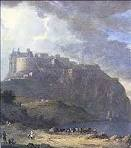
Yet this was 1902, and the shotgun murders of two men - very nearly three - in the dignified setting of Surgeons' Hall (pictured) one of the Capital's most prestigious learning establishments, were just one gruesome instalment in Edinburgh's summer of bloody murder.
Indeed, over the course of a few months during one of the chilliest summers on record, six people would be slain and other lives shattered.
The most disturbing unfolded on Tuesday, June 24, as respected chemistry professor and upstanding soldier, Colonel William Ivison Macadam, and eager young student James Bell Forbes went about their daily business within the laboratories of Surgeons' Hall.
For Col Macadam, 46, the day's business involved sifting through final preparations for nothing less than the coronation of King Edward. As commander of the Second Scottish Volunteer Coronation Battalion, he was expected to depart for London that very afternoon to help prepare for the event.
As he sorted through coronation paperwork and set about completing some minor experiments, he must have struck a fine and easily distinguishable figure in his smart uniform of brigade-major of 1st Lothian Volunteer Brigade.
Certainly, Daniel McClinton, "porter and general servant" at Surgeons' Hall, had no trouble finding him on what would soon become a very grim June morning. He was a former soldier with the 71st Regiment Highland Light Infantry and still maintained a role as a military volunteer. His military links meant no-one looked twice when he arrived for work clutching his rifle.
Not even his wife seemed concerned when he left that morning, telling her: "I'm not for any dinner today, I'm for volley firing."
For reasons best known to himself, McClinton, a 22 shillings-a-week cleaner and porter, harboured a grudge against the professor and, that summer morning, he would snap.
Col Macadam, above left, was experimenting with the flashpoint of oil alongside his brother and business partner Stevenson Macadam, 37, in the hall's laboratory. Together they hunched over a bench, engrossed in their work.
Suddenly, a door opened and in walked McClinton, above right, rifle in one hand, ammunition slung over the other.
Later, Stevenson would tell the High Court that, unusual as it may seem today, he didn't even look twice at McClinton, standing in the doorway, shotgun in his arm, ammunition over his shoulder.
It was only when shots rang out twice and his startled brother staggered, bleeding, across the room that he realised what was happening.
"Stand where you are," bellowed McClinton to Stevenson. "I won't shoot you if you stand where you are. If you interfere with me, I will."
James Kirkcaldie was the laboratory head assistant. Drawn to the laboratory by the odd succession of noises, he encountered a terrifying scene.
As his senses struggled to take in what lay before him, McClinton turned, aimed his rifle and fired.
Kirkcaldie fell behind a desk, apparently shot.
Student James Bell Forbes, of Ravenscraig, Mortonhall Road, was next. Seemingly oblivious to what was unfolding, he was smiling broadly when he opened the lab door only to be blasted by McClinton's fire. He fell, mortally wounded, to the cold floor. Two men dead, another apparently injured, Stevenson Macadam surely must have feared for his own life.
But it wasn't his blood the gunman wanted to spill. Instead, McClinton insisted he had two others - the hall's janitor and another porter - to "get level with".
He may have managed it, but for Stevenson's shrewd skills as a negotiator. Eventually, McClinton finally handed over his shotgun, even warning Stevenson to be careful as it was loaded.
McClinton appeared at the High Court that September, where the jury heard that the porter had become increasingly agitated in the months leading up to the shootings, filled with an irrational fear of plots against him and unsubstantiated plans to deprive him of his army pension.
Yet the jury opted against finding him guilty of murder. Instead, Daniel McClinton was convicted of culpable homicide, his fate to be sentenced to life behind bars.
The Surgeons' Hall case was just one in a summer of bloodshed, much of it fuelled by booze.
Drink certainly flowed in the Cowgate on the weekend of June 28, when Hugh Mooney viciously beat his live-in partner Helen Black to death using, of all things, his wooden leg as a weapon.
Despite the woman's desperate cries of "murder", no-one paid attention. Indeed, the High Court was told such cries were common in the Cowgate.
Mooney was found guilty of culpable homicide and sentenced to life imprisonment.
Drink was also at the heart of the brutal killing of Potterrow woman Mary Hastie, 47, that summer.
It was July 12 and she had already been drinking when she joined neighbour John Adamson's wife at the pub.
The two women made their way back to the tenement at 39 Potterrow, only for Adamson to erupt in fury.
Enraged that Mrs Hastie had led his wife astray, Adamson pummelled her head and face with almost anything he could lay his hands on - a clock, fireplace tongs, a fender and a frying pan.
Beaten and blooded, his victim was barely recognisable.
Police surgeon Sir Harvey Littlejohn arrived at the scene to find her barely alive but, rather than rush her to hospital, he decided to leave her be, yet it took over two hours for her to take her final breath.
Adamson denied murder and a jury took just seven minutes to return a culpable homicide verdict. He was sentenced to 20 years.
Edinburgh was still coming to terms with the Old Town killings when attention turned to Merchiston and yet another violent death.
It's not known what caused Colin Brown to turn on landlady Mary McIntosh at their house at 11 Rochester Terrace, but at his first appearance in court charged with her murder it was already clear he was suffering from serious mental health issues.
By the time of his trial in September, all parties agreed he was unfit to plead and he was remanded at the Royal Edinburgh Hospital. If that case was vague in detail, the nauseating description of what happened to Stockbridge mother Janet Nicoll on August 16 - witnessed by four startled children - more than made up for it.
She was a temperate woman who had never appeared drunk, unlike her booze-soaked husband, Andrew.
He had beaten her before and she had shown friends the marks he'd left on her face and body to prove it. But that summer night, the callous beating would be the last.
Drunken Nicoll turned on her, assaulting her so badly she couldn't lift herself from the passage outside her 16A Clarence Street house and was found lying, moaning with pain, by two men.
Rather than fetch help, they merely shifted her closer to her front door where her husband would later find her and deliver the second part of his awful attack.
This time four pairs of young eyes were on him. Children, aged from 15 down to ten, watched aghast as Nicoll lifted his foot and stamped on his stricken wife's face and then kicked her ribs.
A post-mortem revealed five broken ribs, punctured lungs, bruises and wounds over her back and hips, and the mark from her husband's shoe on her face.
It took a jury just seven minutes to return their verdict, but not murder, instead it was culpable homicide.
For the life of his wife, Nicoll was sentenced to 20 years in prison.
Appeared Edinburgh Evening News 12 April 2011

Finally getting organised!
After a long break from even looking at this, I'm going to attempt to throw on some features from down the years that I am either particularly fond of, or just don't want to lose.
The three below this post are from a mini series which, if memory serves right, was looking at Victorian eccentricities, quirky stuff those wacky Victorians got up to. I enjoyed writing it, and now, several years later, re-reading it.
Edinburgh has provided a much appreciated source of nostalgic, historic and downright weirdly fascinating subjects for Evening News features down the years. I sometimes wonder if I've written all I possibly can about its past... and then something else pops up and off I go again.
Anyway.. these features are mostly quite old now, although not quite as old as the subject matter. More to come...
The grandest of exhibitions
ANYONE daring to make the suggestion these days would be laughed out of town: spend a fortune building a massive exhibition centre on a scale never before seen in the Capital, then, just a few months later, tear it down again.
But that's what our city forefathers did, not once, but twice in a little over two decades.
And these were not simple halls, built on the cheap. They were grand, beautifully-designed, flamboyant structures, with attention to detail seldom seen today.
They sprawled over two of Edinburgh's favourite green spaces, attracting tens of thousands of visitors every day, drawn first to the Meadows for the International Exhibition in 1886 and then to Saughton Park for the Scottish National Exhibition in 1908, by a vast array of educational exhibitions, quirky displays, fairground thrills and diverse entertainment.
For two summers, each massive exhibition thrilled visitors who travelled from far and wide to see groundbreaking displays of modern techniques in industry, science and art.
The grandest of the two by far was the earlier International Exhibition of Industry, Science and Art, largely enclosed inside an imposing Victorian domed structure that covered 25 acres of the West Meadows and could hold 10,000 people at a time.
Through its main entrance at Brougham Place, visitors were guided to a range of double courts with at least 15 separate sections devoted to everything from the latest mode of transport - tramways - to pottery, from "women's work" displays of embroidery to chemistry.
Displays jostled for visitors' attention alongside dozens of statues, a Grand Organ and orchestra platform, food and drink sellers and traders showing every possible kind of product: Princes Street store Jenners offered a case of handmade outfits, including a silk dinner dress adorned with pearls and metal beads; Edinburgh firm Stuart & Co unveiled their new concrete, granolithic, by using it to produce two 22ft high Corinthian columns; while an Inverness exhibitor showed off a Victorian version of wall insulation. "It is impervious to damp and rats and mice are unable to eat through it," explained one report of the exhibition.
There were 2000 paintings hung alongside a replica Grecian temple, its pillars and steps covered in the newfangled linoleum from Kirkcaldy, and a 250ft-long railway complete with four locomotives and tenders.
Outside was a full-size house fitted with the very latest gadgets and fixtures - gas lamps, ventilating tubes and free-standing cast iron baths and a single tram track that ferried visitors the length of the Meadows.
The crowds - which on some high summer days numbered as many as 30,000 - were blasted with sights, sounds and smells at every turn from 20,000 exhibits illustrating the "material progress of the age".
But it was the replica 17th century Edinburgh street scenes that must have been the most striking. "The street was entered through a replica of the Netherbow Port and the buildings were arranged to form a street typical of old Edinburgh with a short High Street, market place, Mercat Cross, two closes and a copy of the Old Tollbooth," says Edinburgh historian Jack Gillon, who writes about the exhibition in his book Eccentric Edinburgh.
"The ground floors were laid out as 44 shops and workshops in which attendants dressed in 17th century costumes sold souvenirs of the exhibition."
The exhibition closed after just six months, by which time some 2.7 million people had made their way to the Meadows. "The Exhibition has been literally the biggest, most tempting and most successful show we have ever had in our midst," summed up one report of the closing days.
Soon it would be a distant memory. The grand hall, the massive pavilion, the tram track and the laboriously-recreated streets were dismantled and the Meadows returned to its green, open space as required by an Act of Parliament.
Some evidence of it remains though. The Prince Albert sundial still stands in the West Meadows, the 26ft-high memorial pillars at the west end of Melville Drive, and the whale jawbone arch at the junction of Jawbone Walk with Melville Drive, which was given to the city by the Zetland and Fair Isle Knitting stand.
The 1908 Scottish National Exhibition was on a slightly lesser scale but equally breathtaking.
Where else could Edwardian Edinburgh folk possibly hope to visit a Senegalese native village, ride on a roller coaster, learn about sewage and then relax at Van Houten's Cocoa Pavilion with a cup of hot chocolate and a biscuit?
The exhibition was laid out on the garden ground of Saughton Hall Mansion, west of Balgreen Road, on an area now used as Saughton Rose Gardens and Saughton Public Park.
Edwardian visitors, many transported to the exhibition thanks to a new railway connection with Waverley Station, had plenty of choices on offer: the Palace of Industries, a 100,000sq ft pavilion with two 125ft ornamental towers, packed with exhibits from around the world; the Machinery Hall with displays of printing, shipping, electricity, sewage disposal, or the Fine Art Galleries, housing the best of Scottish art.
But perhaps the most visited "exhibit" was the Senegalese village, where 70 natives of French Senegal - and their children - lived in bee-hive huts beneath a line of trees.
There they showed off their skills as goldsmiths, wavers, musicians and dancers to a fascinated public, gradually adding layers to their scant outfits as the summer months turned to autumn.
Not everyone welcomed the natives with open arms, however, as was clear in one letter to The Scotsman, penned by J Stiggins. "It would appear that we have now encamped in the heart of Christian Scotland a hundred black heathens from French Senegal who are displaying their native industries and their native costumes including the practice of polygamy and the use of heathen religious rites," he wrote.
Like its predecessor, the Scottish National Exhibition was a massive success - with more than 3.5 million visitors - but the final celebrations were soured thanks to drunken yobs, with trouble breaking out when the bar was shut half an hour early.
"At the bandstand policemen were forced to raise their batons as youths pitched in with chairs and music stands," recalls historian Malcolm Cant.
It was a less than glorious conclusion to what had been a resounding success.
Soon, demolition teams would dismantle an exhibition site that had taken 1000 men many months to erect, leaving just the Winter Garden on Balgreen Road.
Further reading: Eccentric Edinburgh by JK Gillon is published by Moubray House Publishing. Marchmont in Edinburgh by Malcolm Cant's is published by John Donald. Edinburgh: Gorgie and Dalry, also by Malcolm Cant, is published by Malcolm Cant Publishing.
CAST OF CHARACTERS
THERE was no shortage of street entertainment for our forefathers, in a city that would go on to be known the world over for its festivals.
One of the best known 19th century showmen was NED HOLT. He abandoned his apprenticeship with a baker to earn a crust as an actor playing in the penny gaff, usually staggering home to his room at the White Horse Inn.
His claim to fame - long before Ozzy Osbourne - was the ability to kill rats with his teeth. Visitors to his Grassmarket booth were also able to oogle at the Fat Lady, a "living" skeleton and, the star of his show, a petrified 1000-year-old mummy.
It cost a penny for a look, but it's unlikely anyone was offered a refund when Holt eventually confessed it was a fake - a skeleton bought for a few pennies and covered with rubber and bark from a local tannery.
Not all entertainers were seeking money under false pretences. A mysterious Victorian lady - dubbed The Nightingale - serenaded New Town residents into the night, a dark veil draped over her face to conceal her identity.
Rumoured to be an opera singer, she turned out to be KATE POWELL, a convent educated teacher fluent in four languages who began her career after the death of her husband in 1890.
"Cocky nit, cocky nit, a ha'penny the bit, bit, bit" was a common cry that echoed around Edinburgh in the mid-19th century. Coconut Tam, THOMAS SIMPSON, was a small bent chap who always wore a bowler hat as he strolled the streets peddling sweets, ice-cream, gingerbread and, naturally, coconut. His character is now being revived, thanks to Father Ted's Ardal O'Hanlon who plays Coconut Tam in the newly released film, The Adventures of Greyfriars Bobby.
The first Eskimo to visit Scotland, JOHN SAKEOUSE, below, was 18 when he arrived in Leith in August 1816, stepping off the Greenland whaler, the Thomas and Anne.
Claiming to want to learn English and become a missionary, he soon became a figure of immense interest, giving exhibition of "several feats of dexterity" using his harpoon which, according to reports of the time, resulted in the "greatest concourse of spectators ever known to have assembled in Leith".
Wearing native costume, he entertained onlookers by diving under the water, turning over his 16lb kayak and emerging, sitting in it. He also won a whale boat race against a six-man crew. He went on to join the Leith whaling ships as a guide and interpreter but died, tragically young in 1819.
Fishwives were a unique breed - none more so than MAGGIE DICKSON. She was hanged in 1724 for concealing the birth of a stillborn illegitimate child - in days when bearing a child out of wedlock led to public humiliation and shame.
Maggie went to the gallows proclaiming her innocence, but was duly hanged and declared dead.
Safely nailed inside her coffin for the journey to Inveresk, her friends stopped at an inn for refreshments, emerged and heard strange noises coming from the box. The lid was prised open, a vein was bled and some spirits poured down Maggie's throat.
By evening she had recovered enough to speak, next day she was up and about. Soon she was making a small living from accepting coins from curious locals who came to marvel at her. She became known as Half-hangit Maggie and lived to a ripe old age.
Appeared Edinburgh Evening News, 25th February 2006
Eccentric sparks set city alight

'BEAUTIFUL as she is, she is not so much beautiful as interesting" wrote one of Edinburgh's most famous sons, Robert Louis Stevenson, of the city of his birth. "In a word, and above all, she is a curiosity."
And how right he was.
Stevenson was remarking on the eccentricities of Edinburgh's architecture - the Victorian squalor of the Old Town harshly juxtaposed by the New Town's elegance, where grave, bewigged judges sat in splendour just yards from the stinking homes of bedraggled citizens.
Yet his comments could just as easily relate to the almost disproportionate number of unconventional and outlandish figures, each with his or her own unique place in the Capital's history.
For while every town and every city has its share of interesting characters, few can boast such a wealth of oddballs and eccentrics as Edinburgh.
Some have, of course, become worldwide household names: from the infamous, murderous pairing of Burke and Hare to the heartwarming, sugary tale of Greyfriars Bobby and the duplicitous Deacon Brodie.
Then there's Indian Peter. Less famous, but with a story just as remarkable, he was snatched as a child, sold into American slavery then kidnapped by Native Americans. Perhaps even stranger, Indian Peter returned to Edinburgh to publish the city's first 'A-Z' style roads directory and launch its penny post, while making a handsome living from dressing as a Native American and performing war dances.
Larger than life, perhaps, yet Indian Peter seems tame when set alongside some of Edinburgh's other extraordinary characters.
LORD MONBODDO (pictured)
James Burnett, Lord Monboddo, a Court of Session judge, scholar of language evolution and philosopher, should have been a perfect example of intellect and good sense. In truth, he was among Edinburgh's oddest characters.
Born in 1714, his home in St John Street became one of the city's key venues for intellectual gatherings - Burns, Samuel Johnson and James Boswell were among his guests. But quite what they made of Monboddo's theories is anyone's guess.
According to Monboddo, babies the world over were born with tails which were lopped off by midwives at birth. He was passionate about the Ancient Greeks and believed prime physical condition could be achieved by following their practices - so much so that he loathed anything modern, preferring to travel by horseback in all weathers rather than accept the comfort of a modern carriage.
But perhaps his finest moment came when visiting the King's Court in London in 1787. Rumours swept the building that part of the courtroom ceiling was going to collapse. Burnett, now aged 71, partially deaf and with eyesight problems, was the only person not to move. Asked later why he hadn't stirred, he calmly stated that he thought it "an annual ceremony with which, as an alien, he had nothing to do".
Despite his oddities, Monboddo was later considered to be years ahead of his time. He shocked society with his belief that the orangutan was a form of man - a theory later seen to precede those of Charles Darwin.
DR JAMES GRAHAM
Lord Monboddo appears normal alongside his 18th century contemporary, Dr Graham, possibly the world's first sex therapist.
His Temple of Health and Hymen became a Mecca for Georgian gents and their blushing lovers with its promise to cure sexual woes by way of an aromatic mattress, powerful magnets and a hefty jolt of electricity administered at the crucial moment.
Born in the Cowgate, he put his medical studies at Edinburgh University to dubious use by becoming one of the many quacks who combined a gift for showmanship with a gullible public.
And yet, like Monboddo, is it possible he was really ahead of his time? He spouted the benefits of mud baths as vital for long life, embraced vegetarianism - although he took it a bit far by suggesting it was possible to live for months without food - and encouraged his patients to eat healthily on nuts and seeds and drink only cold water and fresh milk.
He is credited by some for inventing electrotherapy - still used in hospitals today - and his clever marketing skills and use of celebrity endorsement was many decades ahead of its time. Nuts, seeds, mud baths and electric shocks, however, did not ensure Dr Graham lived to a grand old age. He died in 1794, aged 49.
JAMES 'BALLOON' TYTLER
Surgeon, encyclopedia writer, composer, poet, publisher - James Tytler was also the first man in Britain to fly.
It was at Comely Gardens near King's Park in August 1784 that he donned a cork jacket for protection and seated himself in the basket of his fire-powered balloon ready for lift off.
"The ropes being cut, he ascended very high and again descended very leisurely on the road to Restalrig, about half a mile from the place where he rose," reported the Gentlemen's Magazine of September 1784.
Tytler's own description paints a rather more chaotic image. "The balloon set off from the ground with the swiftness of an arrow but could not ascend more than a few feet when it was stopped by a rope.
"This broke, and when freed from this, it flew with such rapidity that several of the spectators, terrified at the sight, endeavoured to drag it downwards. Thus my career was stopped and I arose only a very small way, some say 350 feet, others 500 feet."
One biography written 100 years after his death suggested his flight prompted more guffaws than gasps of awe.
"There was no real danger; the balloon only moved so high and so far as to carry him over the garden wall and deposit him softly on an adjoining dunghill," reported The Scotsman at the time.
Oddball, off centre, certainly unconventional: just one of many characters whose presence lit up - as RLS might have put it - Edinburgh's curious streets.
And without them, Auld Reekie may well have been a much greyer city indeed.
Appeared Edinburgh Evening News, 18 Feb 2006
Victorians exercised a weird side

ALONG a classic New Town street, past ornate black iron railings and through an elaborate set of gates; today, the view from Fettes Row to King George V playing fields is little more than a patch of greenery among the smart grey town- houses, a haven from the rumble of the traffic over the cobblestones, somewhere to walk the dog and for the children to play.
Yet 150 years ago, this was the site of something truly sensational: perhaps the most striking, unusual and bizarre structures ever erected in the Capital.
In a city which over the years has seen its share of curiosities - including a recreation of Mount Vesuvius, a Disneyland-style home and an underground cave dwelling - the Royal Patent Gymnasium was in a league of its own.
Now long gone and almost entirely forgotten, it was one of many follies and fun houses that amused, entertained and - in the gymnasium's case - exercised our forefathers in days before television, cinema and expensive gym memberships.
The brainchild of Gorgie businessman John Cox, the Royal Patent Gymnasium opened in 1865, and it was simply incredible.
It had everything the sporting Victorian might need to keep fit plus much, much more.
Capable of entertaining thousands - through either gentle exercise, placid spectating or a tough workout - it was on a scale bordering on the ridiculous.
Its prime attraction - the Patent Rotary Boat, a sort of merry-go-round on water, which could hold 600 passengers and 125 rowers - must have astonished the hundreds who lined the Fettes Row railings the April afternoon of the grand opening.
"The so-called 'boat' is in the form of a circle, 471 feet in circumference and six feet wide," reported The Scotsman at the time. "It is placed in a large circular artificial pond and is designed to rotate with rapid motion when the means of propulsion are applied."
Cox didn't stop there. His "velocipede merry-go-round" was just as impressive. "It is a circular wheel 50 feet in diameter and 157 feet in circumference. The outer rim of the wheel is broad and rounded like a saddle and is formed so that 144 boys can sit astride and propel the huge machine in a circle by pressing their feet against a wooden staging - upon the principle of a velocipede," explained The Scotsman.
"Within the outer rim, where the boys take their seats, there are rows of seats which will accommodate 180 persons who will enjoy the rotary movement"
The structures must have been quite a sight. As must the vision of 200 stiffly dressed Victorians perched on Chang, "the giant's see-saw", a wooden beam 100ft long supported on an iron axle 25ft above the ground. Each elevation took its occupants - up to 200 of them - 50ft off the ground.
There were also two "giant's strides" - wooded beams fixed perpendicular to the ground rising to 30ft with a wheel on top. Attached to the wheel were eight chains, 27ft long, with wooden handles for Victorian lads to grasp as they swung themselves round.
For anyone who still had the energy, there were bowls, vaults, climbing poles, stilts, quoits, swimming . . . all for 6d.
Dreamed up by the genial Mr Cox, a tannery boss whose glue and gelatine business at Gorgie Mills exported worldwide, the gymnasium was intended to help improve the health of his fellow citizens. Cox was determined to provide a place of amusement, recreation and bracing physical training.
He chose what was once Canonmills Loch, between Eyre Place and Royal Crescent, which had been drained to make way for the New Town houses and the developing rail links at Scotland Street Station. Soon his vast wooden structures were towering over the site, marvels of his ingenuity and of Victorian engineering.
None more so than The Prince Alfred Wreck Escape, an "ingenious swimming apparatus" which enabled non-swimmers to experience the dubious thrills of escaping from a stricken ship. The gymnasium was soon at the heart of Victorian life in the city.
In winter the pond would be lit at night for skaters and there would be music from military bands Athletics, bike races, and the genteel Victorian past-time of pedestrianism - which taken to extremes saw participants embark on gruelling walking challenges that could last days - all happened within those iron railings.
It wouldn't last. Cox's death, aged 70, was the beginning of the end. Soon there would be complaints of foul smells from the gymnasium ponds and rowdy drinking sessions. The grand gym's structures were dismantled and the ground cleared to make way for a new kind of sport - football.
James Cox's astonishing outdoor gym, which entertained and exercised thousands of Victorians, was no more: a rather miserable end for the self proclaimed "wonder of Edinburgh".
Search the Scotsman Digital Archive for thousands of articles dating from 1817 to 1950, available to subscribers on www.scotsman.com
Appeared Feb, 11, 2006 Edinburgh Evening News.
Friday, 21 January 2011
BIRD MAN'S BRUSH WITH DEATH - TIMES THREE
 *picture: Intrepidcamera.com
DANGLING above the ferocious swell of the storm-lashed sea, somewhere between a trawler and a rescue helicopter, Mike Day may have felt a pang of longing for the pin-stripe suit comfort of his job as a corporate lawyer in Dubai.
A gale was raging, the waves below were immense - the vicious tail of a hurricane that had already lashed the east coast of America, now in its death throes off the north-west tip of Scotland - and Mike, on his first day making his first film, could have been forgiven for wondering if it might be his last.
A few weeks earlier, he'd been tidying up legal wrangles in the Persian Gulf, cosy and cossetted from the elements, a world away from this Hebridean hell where the Atlantic threatened to engulf the fishing trawler, sweeping him and his precious camera equipment to the bottom of the sea.
"I thought it was all over," nods Mike from North Berwick. "The trawler was sinking, I was being winched off and all the kit I needed was still on the deck. Meanwhile, my brother was in another boat in the same storm, in the same situation and with a broken radio. You could say I was a little concerned."
Indeed, his attempt to capture an ancient Hebridean tradition on camera might have been the shortest ever career in filmmaking. Having taken redundancy from his law firm and thrown himself into pursuing this lifelong dream, he was now at the mercy of elements so fierce that even the hardened islanders he'd come to film were shaking their heads and cursing how bad it was.
But it was going to take more than one of the worst storms in decades - and two further agonisingly close brushes with death to come, one of which left him fighting for his life in an Edinburgh hospital - to sweep Mike's plans overboard.
Redundancy cheque in pocket, he had arrived in Stornoway eager to fulfil his ambition to become a filmmaker, a career for which he had slowly been preparing for years.
"I arrived in London from Dubai and went straight to North Berwick to get a boat to sail through the canal to the west coast and then up north," recalls Mike, 31. "I was, literally, a week out of the office and I was on my way to make a film about the disappearing culture of the Hebrides."
He'd heard that every August a ten-man team from some of the smallest villages on the northern-most tip of the Isle of Lewis set sail for the uninhabited islet of Sula Sgeir, 40 miles north, in pursuit of a centuries-old tradition.
On reaching the isolated islet they stay for around two weeks when, much to some animal welfare charities' despair, they perch on the edge of sheer cliffs and pluck 2000 young gannets from their nests, despatching them with a blow to the head then plucking, quartering and salting them ready for transport back to Lewis.
Known as guga, the pungent seabird flesh is an acquired taste but a prized delicacy on the island and abroad. These men of Ness are the only people in Britain allowed to hunt seabirds. And so protective of their tradition are they, that the annual guga hunt has not been captured on film for 50 years.
And after that first terrifying day as he swung from the helicopter winch, wondering if his kit might be rescued too, the guga hunt might well have survived unfilmed for at least another year. But Mike, son of a merchant seaman who'd learned to sail off North Berwick as a lad and already had the Sydney Hobart Yacht Race under his belt, was determined not to be beaten.
Tonight, the results of that journey to film the 2009 guga hunt make it to the small screen, in a BBC2 Scotland documentary, The Guga Hunters of Ness.
But what went on behind the camera is nearly as breathtaking as the hunt itself. Joining Mike on board a 38ft yacht that doubled as the production unit and their accommodation for the fortnight filming, was his brother Matt - a one-time British Olympic sailing hopeful who had joined him on the Sydney-Hobart race - 19-year-old Will Brown, a marine engineer from Edinburgh and experienced sailor Aaron Sterrit, 22, from Kingussie.
And none, nods Mike, was fully prepared for the nightmare conditions they'd endure, from endless hours without sleep to scrabbling over rocks to film and the horrific weather. He says: "The lack of sleep for days on end was tough. Most of the time it was blowing a Force Nine gale and someone had to be on watch all the time.
"We were all nearly killed on the last day of filming when we were hit by a freak wave that came from nowhere and swept us over so we were almost horizontal. When the boat came back up, Will had fallen the full width of the boat and smashed our throttle controls so we were in this monstrous surf with no engine. We had to sail to a nearby island to rig up some ropes and cords which we used to control the engine."
Bad enough, but the drama of making his first film for his new company - the rather appropriately named Intripid cinema - wasn't over yet. He was busy editing his shots when he suddenly felt unwell. He woke days later in the Royal Infirmary, a victim of viral encephalitis.
He says: "It caused my brain to swell so much that it started to push my eyeballs out. I couldn't walk and I couldn't see. I was given a 70 per cent chance of dying or having some kind of brain damage."
He made a full recovery at his parents' Karen and George's North Berwick home.
But he accepts that these first steps into the world of filmmaking were infinitely more dramatic than he'd ever intended.
"It's not put me off, though," he grins. "I've got a very secret project - another quite sensitive topic - on the cards and I'm planning to shoot a feature film, a drama, next year."
And the plan is to avoid any more brushes with death.
"I've had three narrow escapes making this film," grins Mike. "I'm not planning any more."
Historic hunt
SEABIRDS, said to taste like a cross between mackeral and duck, were once a popular delicacy, but in island communities off the west coast of Scotland, guga formed a staple diet.
Hunting for gannets was outlawed in 1954, but the men of Ness were granted an exception - allowed to hunt for 2000 birds once a year on cultural grounds.
The practice has been branded "barbaric and inhumane" by the SSPCA, but the RSPB says it has a "neutral" stance on the hunt as gannet numbers are increasing.
APPEARED EDINBURGH EVENING NEWS 20 JAN 2011
A CENTURY COLLARING CRIMINALS

A COLD, clear Sunday morning in January 1911. City insurance clerk Eric Wilson strode along a cinder path in the Braid Hills, contemplating the rural landscape.
He was walking along a path in the shadow of the Hermitage Woods when something odd caught his eye. On a patch of land in the valley that dips between Blackford Hill and Braid Hills, on a field known to many locals as the Hermiston estate "bog" or the "sheep park", lay what looked disturbingly like the figure of a woman.
Lying on her side, her face covered by her hat, she was respectably if a little shabbily dressed, with her gold wedding ring glistening on her finger.
At first Wilson hoped she was just in a deep, probably drunken, sleep. His hands gripped the fence that separated the path from the field and shook it as hard as he could, yelling out to her.
There would be no answer.
He dashed to a nearby dairy farm for help. Now with farm labourer William Fleming by his side, the lifeless woman's light blue hat was lifted to reveal her features. Both must have reeled at the sight of the blood which had seeped from her staring eyes and streaked her lifeless face.
Now it was becoming horribly clear. This unfortunate woman, only around 30 years old, had been murdered.
Who she was, exactly what had happened to her and, most importantly, at whose hands she met her end, was now a matter for the police to solve.
It was Sunday, January 22, 1911. Generations have come and gone and what shocked Edinburgh at the time is now largely forgotten. But while this was a tragic, wasteful end to a young woman's life, the crime heralded the dawn of a whole new era in police detective work. For the officers investigating the murder victim's grim death on this picturesque landscape, did what none before them had attempted in Scotland.
They called in the hounds.
Today police dogs play a fundamental role in helping to patrol our streets, their unique skills a key weapon in the battle against drugs, in the search for missing people, in crowd control and on the scent of criminals.
It's hard to imagine a modern police force without its unit of highly-trained sniffer dogs and handlers.
But in 1911 when Edinburgh's police force asked for bloodhounds to be brought to this stretch of hillside in the hope they might sniff out the perpetrator of such a dastardly deed, it was the stuff of a Sherlock Holmes story.
While some at the time may well have questioned whether dogs could really help bring a criminal to justice, there was no doubting that the unusual decision to use them helped change the face of policing forever.
Not that the startled insurance clerk or the grim labourer from Braid Hills Dairy Farm had any of that on their minds as they gazed at the lifeless body of 30-year-old Maria Jane Boyle, a mother of two who lived with her husband, a platelayer, in Leith.
Poor Maria must have been a desperate sight for those two startled men as she lay on the cold, hard ground, the pocket of her brown skirt ripped off and lying near the body - the only sign of a possible struggle - her deathly white cheeks stained with blood that had trickled from her eyes, and angry marks on her neck where her attacker had squeezed the life from her.
Within an hour, Edinburgh University's Professor Harvey Littlejohn had confirmed she had been strangled. But it was the remote location of where the deed had been done and the potential that the area still harboured the killer's scent that immediately raised hopes that a new and largely untested method of detective work - using "sniffer" dogs - might well help.
Within hours, a call had been made to Frank Raynor, an accountant from Haddington who had spent five years attempting to train five bloodhounds in tracking scent. He was told to bring his bloodhounds to the scene as soon as possible. They came, one a large black beast called Warboy, by taxi cab.
It was so unique that The Scotsman at the time reported the appearance of the bloodhounds in fascinating detail: "An unusual development in police investigation work in Edinburgh was the requisition of bloodhounds for the purpose of tracking the assailant," reported the paper the day after the murder had taken place. "No sooner had the hounds been set to work than they went off keenly upon what appeared to be a very hot scent."
Police historian Alastair Dinsmore, of the Glasgow Police Museum, says dogs were a rarity in police work in those days. "London police used privately-owned hunting dogs to try to find Jack the Ripper. That was probably the first time dogs had been used in that way. But it was very new for this country. We were well behind the Continent
In Belgium and Germany dogs were used regularly by police to look for murder weapons."
Sadly, Edinburgh's first murder search involving dogs would end in failure. The scent took the dogs, detectives and various other officers for half a mile through the Hermitage Woods. But as they trudged across open ground and over burns, initial optimism faded as the dogs struggled to keep track of the scent.
Miles of ground were covered, but it was eventually assumed the killer had escaped over the burn, unknown to him at the time, a move that earned him his freedom as it washed away the scent and defeated the dogs. Maria's killer was never traced. Even a £100 reward put up by the city magistrates failed to turn up any clues.
It could have been an embarrassing failure for the force. But, as The Scotsman confirmed: "The authorities intend to resume operations with the bloodhounds as they are of the opinion that the possibilities of these agents have not been exhausted."
Precisely when the Edinburgh City Police - later part of Lothian and Borders Police Force - welcomed its first official canine recruits is unclear.
But what is known, is that on a chilly January day, 100 years ago, police found themselves on the trail of a whole new era in fighting crime.
LEAD ROLE
THEY were first used in fighting Edinburgh crime 100 years ago this month, but today's police dogs play a key - and varied - role in keeping our streets safe.
Today's hounds are usually German Shepherds trained in anything from crowd control to finding missing people, sniffing out drugs and even finding buried bodies.
There are 17 "general purpose" police dogs at the dog unit at Fettes, along with five which specialise in finding explosives and eight trained in finding narcotics.
Sergeant Duncan Sutherland, one of the force's dog trainers and handlers, says: "Like every area of the force, the dog unit is looking to the future and how to evolve. One of those areas is wildlife crime, one of the dogs is now trained to sniff out poisons.
"It's hard to imagine a modern force today that wouldn't use dogs."
APPEARED Edinburgh Evening News Jan 13,2011.
Subscribe to:
Posts (Atom)